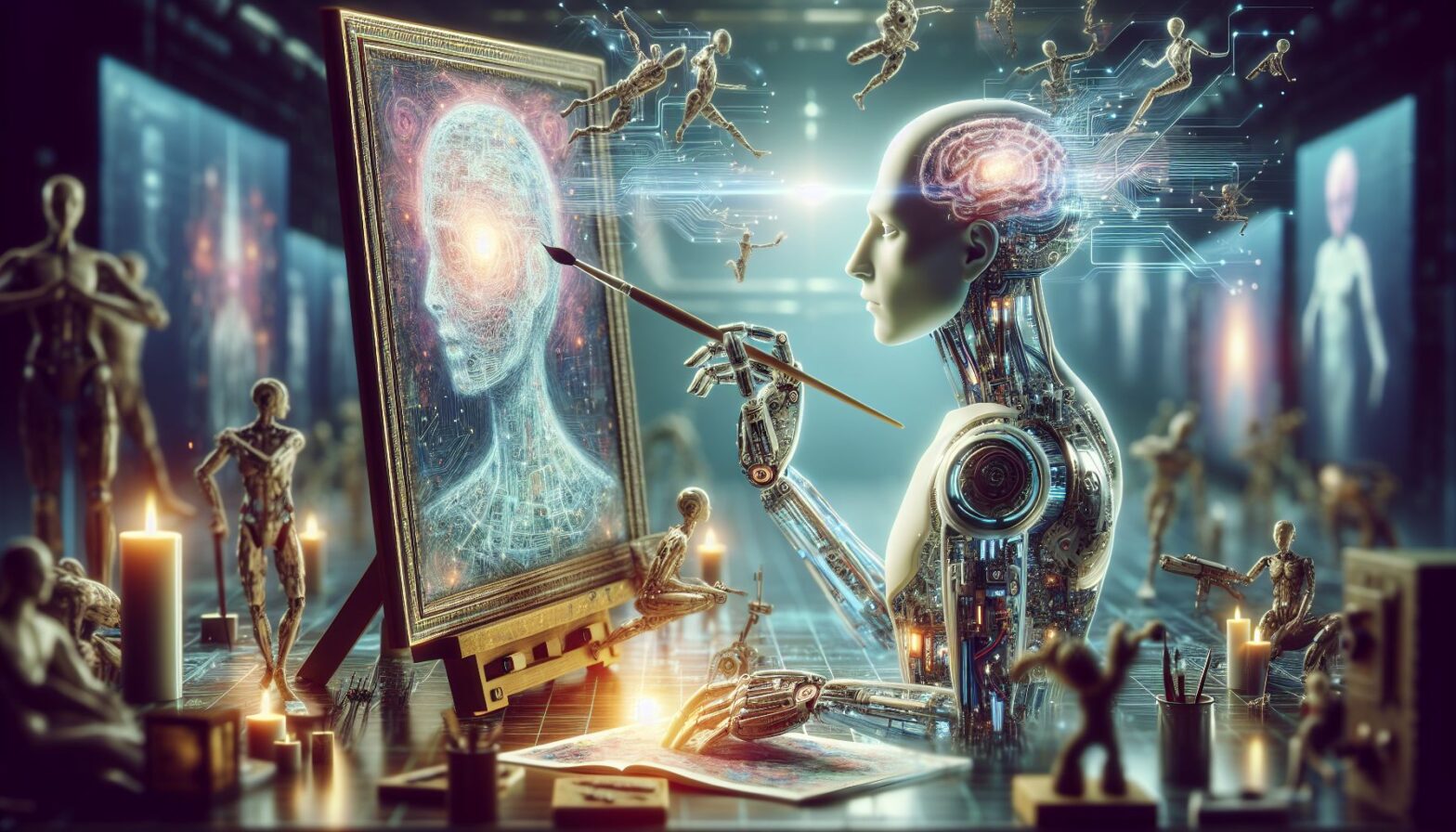
Hey tech enthusiasts! Gather ’round, because today’s topic is something that’s always excited me and has now reached the point where it feels like magic: AI in creative arts. Yes, that’s right—machines making art, composing music, and even writing stories like this one. It’s not exactly Skynet, but it feels pretty close to science fiction, doesn’t it?
The Arrival of AI in the World of Creativity
You might be wondering, “Hold up, machines making art? Isn’t creativity supposed to be a human thing?” Well, that’s a question I’ve often pondered while sipping my coffee in front of an interactive AI art installation. But let me tell you, AI’s emergence in creative arts is changing how we think about creativity itself.
The Artistic Algorithm
Thanks to tech giants like Google, OpenAI, and smaller creative startups, algorithms are now being trained to not just mimic but create original works of art. Programs like DALL-E and Midjourney can generate visuals that are sometimes indistinguishable from the works of seasoned human artists. I’ve played around with these tools, and let me tell you, the experience is like opening a door to a parallel universe of creativity.
What’s exciting is that these AI systems don’t just copy existing art. They can merge styles, add new dimensions, and even invent forms that we humans might not conceive. Imagine the abstract thought process of a Picasso fused with the surreal textures of Dalí, and then add a pinch of creativity from an alien civilization—yeah, it’s mind-blowing.
Music Beyond Human Comprehension
Okay, let’s move from visuals to soundscapes. The realm of AI-generated music is where things get really intriguing. Companies like Aiva and Amper Music (recently acquired by Shutterstock) are pushing the boundaries in music composition. Your favorite movie score might already have a bit more machine influence than you realize. These AIs don’t just produce full-blown symphonies—they do it in mere seconds, a feat that would take us musically-gifted mortals weeks or even months.
Symphony in Silicon
Imagine walking into a concert where Bach meets Daft Punk, guided by an AI composer that takes audience feedback in real-time to morph its composition on the spot. This isn’t just wishful thinking. I went to one of these experimental shows, and the experience was transcendental. The AI adjusted its tunes based on the crowd’s energy, creating a musical dialogue between human and machine. I mean, are live DJs even safe anymore?
The Storytellers of Tomorrow
Oh, and before we move on, let’s not forget storytelling—my personal favorite! AI-powered writing assistants like ChatGPT (wink) have already taken the publishing world by storm. AI can now generate everything from news articles to full-length novels. What gets me is how these models are trained with thousands of books, newspapers, and other writings, allowing them to grasp the connected patterns of narrative, structure, and character development.
From Page to Processor
Imagine this: a lazy Sunday, cup of tea in hand, and you’re reading a novel that seems to capture the essence of both Shakespeare and George R.R. Martin. That’s AI flexing its narrative muscles. One such remarkable experiment was conducted by Botnik Studios, where they used predictive keyboards to co-write a chapter of a hypothetical “next Harry Potter book.” It’s quirky, it’s delightful, and yet, oddly genuine. It challenges the essence of storytelling and forces us to redefine what an “author” truly is.
The Implications of an AI-Creative Alliance
The rapid adoption of AI in creative fields doesn’t just generate awe. It also sparks a bunch of ethical and societal questions that are too tantalizing to ignore.
Who Gets the Credit?
One of the thorny issues we’ll have to grapple with is attribution. If a stunning piece of art is generated by an AI trained on thousands of human artworks, who does the intellectual property belong to? The lines are blurry, and this lack of clarity keeps legal experts scratching their heads. Some artists argue for joint ownership, while tech companies are eyeing copyrights with a sense of proprietary pride.
The Creative Gig Economy
Then there’s the matter of jobs. Will AI put artists, musicians, and writers out of business? Personally, I’m in the camp that sees AI as a tool—one that artists can use to explore new creative territories. It won’t replace creativity but will augment it. Think of it as a collaborative partner rather than an adversary. Much like how digital cameras didn’t eradicate photography but ushered in a new era, so too will AI transform the arts.
Peering Into the Future
Now let’s dig into some speculation because it’s just too darn enticing not to. Looking ahead, I see a world where AI-generated art will stand alongside human masterpieces in galleries. Maybe we’ll have our own AI art critics or even virtual museums that morph their layouts depending on who’s visiting. In music, personalized soundtracks could become the norm, synced to our emotional and physiological states through wearable tech. Imagine a world where the line between artist and audience disappears—sounds exciting, right?
AI in creative arts paints a techno-utopian future where human genius and machine proficiency come together into unprecedented forms of expression. As we stand on this exciting threshold, it’s clear that the age of AI creativity isn’t about replacement—it’s about collaboration.
So let’s embrace this technological Renaissance, shall we? Whether you’re a creator or a consumer, there’s a whole universe of possibility right around the corner. I couldn’t be more thrilled to witness—or better yet, partake in—this new chapter.
Now, time to check out some AI-generated tunes while sketching my next “masterpiece.” Call it a bot/human collaboration, if you will. The future of creativity has never felt so alive with possibility.