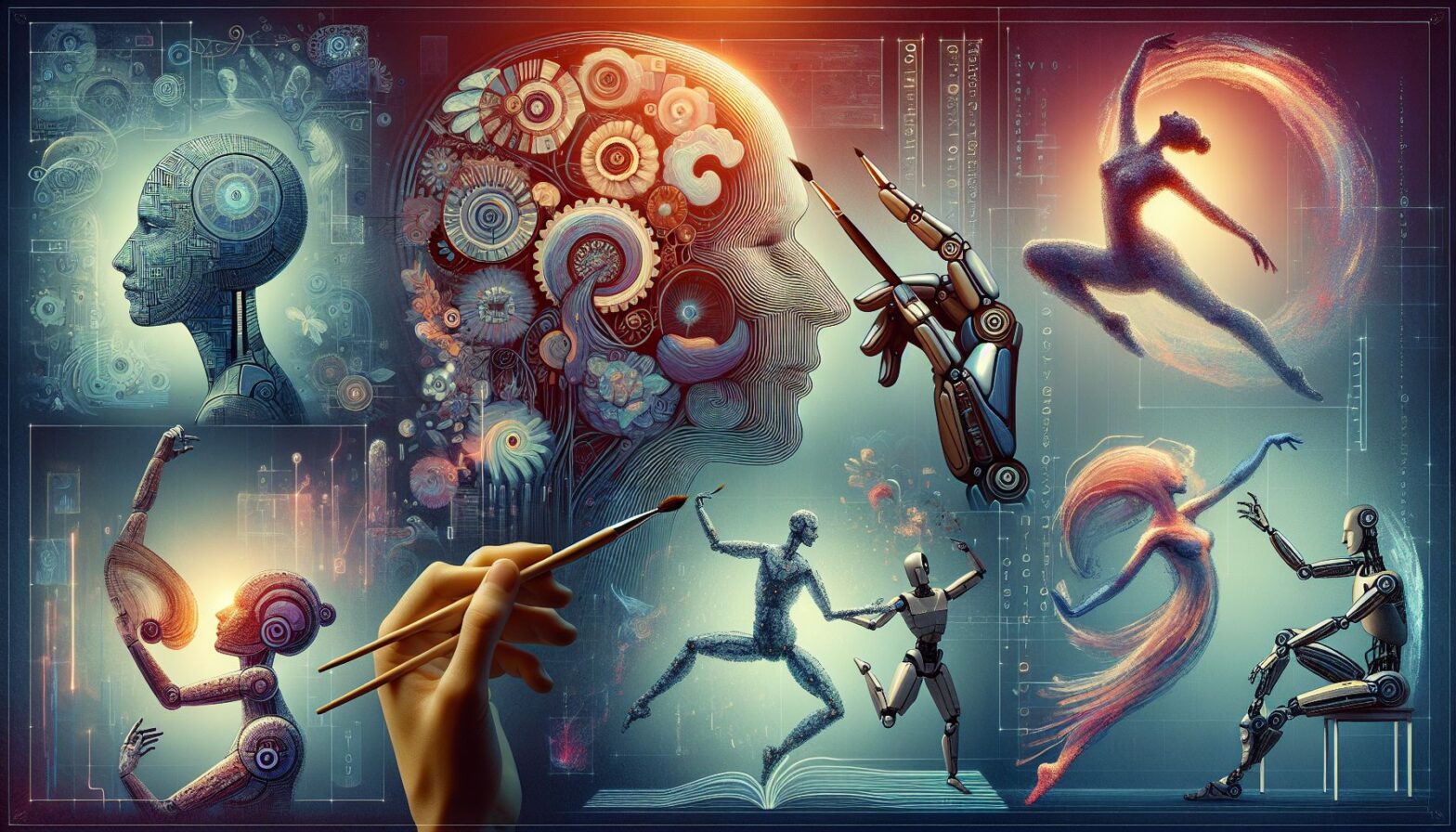
Hey tech explorers! Today, we’re diving into a mix of creativity and code that might just make your neurons fire in excitement: Artificial Intelligence in the realm of creative arts. This is a space filled with fascinating possibilities, quirky glitches, and revolutionary ideas that are changing the way we define art itself. From bot-generated poetry to AI-composed symphonies, it’s a wild time to ask ourselves—can an algorithm be the next Picasso?
When Bots Pick Up Paintbrushes
Let’s start by looking at what’s happening when silicon-based “Picassos” create visual art. There are programs like DeepArt and RunwayML that can transform a humble selfie into something that looks like it belongs in the Louvre. They use neural networks to learn artistic styles and then apply them to new images. You pick a style—from Van Gogh to Mondrian—and voilà, your pup’s photo suddenly looks like it’s been on a few museum walls.
But seriously, can a machine reproduce the soul and sentiment of an artist’s brushstroke? There’s something almost human about how these algorithms interpret and blend artistic styles. The results are sometimes unexpected and, dare I say, provocative. I once tried turning a family photo into a Salvador Dali-style painting, and let’s just say the results gave my relatives a whole new perspective on abstract art. It was weird but weirdly compelling.
AI Musicians Jamming with the Greats
From visual arts, let’s tune into music, an area where AI shows its tonal and rhythmic flair. OpenAI’s MuseNet can generate four-minute musical compositions with multiple instruments, and it does so in a variety of styles, from Mozart to Lady Gaga. It’s like having a virtual jam session with a polyglot musician who never gets tired.
Yet, the debate remains: Are these melodies truly innovative? Music aficionados might argue that while AI can replicate complexity and style, it might lack the depth of human emotion. But here’s the kick—I recently listened to an AI-brewed symphony, and without knowing its origin, I had to double-check if it was indeed from a machine. This raises some pretty mind-bending questions about our perception of creativity and technology’s place within it.
Storytelling Reimagined: AI As Authors
Then we have the domain of storytelling, where algorithms are the new authors crafting tales spun from linguistic patterns. Natural language processing advances have led to AI like GPT series by OpenAI that can generate anything from news articles to full novels. These “writerbots” are even helping humans fight writer’s block, offering story ideas, character development, and entire plot lines.
I tried engaging with one of these models to generate a plot twist for a short story I was working on. The suggestion wasn’t half bad, although a bit surreal—turns out my protagonist was actually a baker by day, secret agent by night, and hailed from Atlantis. Silly, maybe, but it did give me a new lens to view my writing from and sparked more than a few creative ideas. Sometimes the absurd is exactly what you need.
The Creative Human-Machine Collaboration
The question behind all these AI creations often circles back to the essence of creativity: Is this the end of human art? In my view, absolutely not. What we’re witnessing is not a replacement but an augmentation. AI can handle the mundane and replicate styles, leaving humans with more space to innovate and explore ideas never before possible.
Consider this fusion a partnership, a way of pushing boundaries and exploring the unknown. Several artists and musicians are actively collaborating with AI to create pieces they might not have conceived otherwise. AI can work as a muse, an art assistant, or a new member of the band, effectively balancing skills between human nuance and computational brilliance.
Looking Ahead: The Future of AI in Creative Arts
Where does this leave us in the grand scheme of things? As we peer into the future, the potential for AI in the creative arts is immense. We might see AI-driven galleries where you can customize your art experience entirely. Imagine attending a concert where live AI composition morphs based on audience reactions or a novel that adapts its storyline based on your emotional responses.
However, challenges remain, particularly in ethical realms—issues of ownership, authenticity, and the definition of creativity itself. But as technology and society evolve, so too will our acceptance and ingenuity to address these challenges. If anything, AI is the new brush on the canvas of human invention, and we’re just getting started with drawing the picture of tomorrow.
So, to all my fellow tech thrill-seekers out there, next time you play an AI-generated song or admire an algorithm-crafted painting, appreciate the hybrid symphony of bits and brushstrokes. It’s not just a glimpse of the future; it’s happening right now.
Until next time, keep creating, keep questioning, and keep your curiosity coding.