I still remember the first project I ever led that burned to the ground. Not because the code was bad. Not because the servers couldn’t handle the load. It died because two VPs couldn’t agree on who owned the roadmap, and by the time they stopped slinging passive-aggressive all-caps emails, the team had already checked… Continue reading Why Most Technical Projects Fail for Organizational Reasons Not Technical Ones
Category: Blogging
Why Your Technical Project Will Die From the Org Chart, Not the Code
I’ve watched three different companies build the same inventory management system. Same requirements, same technology stack, same market. One shipped in four months. One took two years. One never shipped at all. The difference wasn’t the code. It was never the code. After fifteen years of engineering work across startups and enterprises, I’ve developed a… Continue reading Why Your Technical Project Will Die From the Org Chart, Not the Code
Why Most Technical Projects Fail for Organizational Reasons, Not Technical Ones
I’ve spent the better part of two decades watching technical projects crash and burn. Early in my career, I assumed the problem was always the codeâbad architecture, poor scaling decisions, wrong stack. Then I started paying attention. The pattern was embarrassingly obvious: the failures almost always had organizational fingerprints all over them. The Myth of… Continue reading Why Most Technical Projects Fail for Organizational Reasons, Not Technical Ones
OpenTofu 1.9 vs. Terraform 1.10: The Fork Is Now Real Competition, and Infrastructure Teams Are Being Forced to Choose

The Fork Has Matured Into Something Real I remember sitting in a Slack thread in August 2023 when HashiCorp announced the Business Source License change. The conversation shifted from “this is unfortunate” to “we need a plan B” almost immediately. That fork, OpenTofu, backed by the Linux Foundation, was supposed to be a protest project.… Continue reading OpenTofu 1.9 vs. Terraform 1.10: The Fork Is Now Real Competition, and Infrastructure Teams Are Being Forced to Choose
Salt Typhoon’s Reckoning: How One Year of Carrier Compromise is Rewriting Network Engineering

The Breach We Should Have Seen Coming When the FBI and CISA confirmed in late 2024 that Chinese state-sponsored actors had compromised at least nine major US telecommunications carriers through what they called Salt Typhoon, the reaction split into two camps. One side expressed shock that something of this scale could happen. The other side,… Continue reading Salt Typhoon’s Reckoning: How One Year of Carrier Compromise is Rewriting Network Engineering
AWS re:Invent 2024 Dropped Graviton4 and Amazon Nova — Six Months Later, Are the Cost Savings Real?

The Promise: New Silicon, New Pricing Last November at re:Invent, AWS made two announcements that caught the attention of anyone who has spent the last few years trying to justify cloud spend to finance departments. Graviton4 arrived as the latest iteration of AWS’s custom ARM-based processors, and Amazon Nova launched as a family of foundation… Continue reading AWS re:Invent 2024 Dropped Graviton4 and Amazon Nova — Six Months Later, Are the Cost Savings Real?
Aurora DSQL at Scale: Why Everyone’s Adopting It and Why Your Bill Might Surprise You
The Quiet Revolution Nobody Expected AWS dropped Aurora DSQL into the world at re:Invent 2024, and if you weren’t paying close attention during the keynote, you missed one of the more consequential database announcements in years. This wasn’t a flashy, headline-grabbing launch. No celebrities on stage. No promises to replace your entire data platform. Instead,… Continue reading Aurora DSQL at Scale: Why Everyone’s Adopting It and Why Your Bill Might Surprise You
The Real Cost of AWS Graviton4 vs. Azure Cobalt 100: A Workload-by-Workload Breakdown for 2026
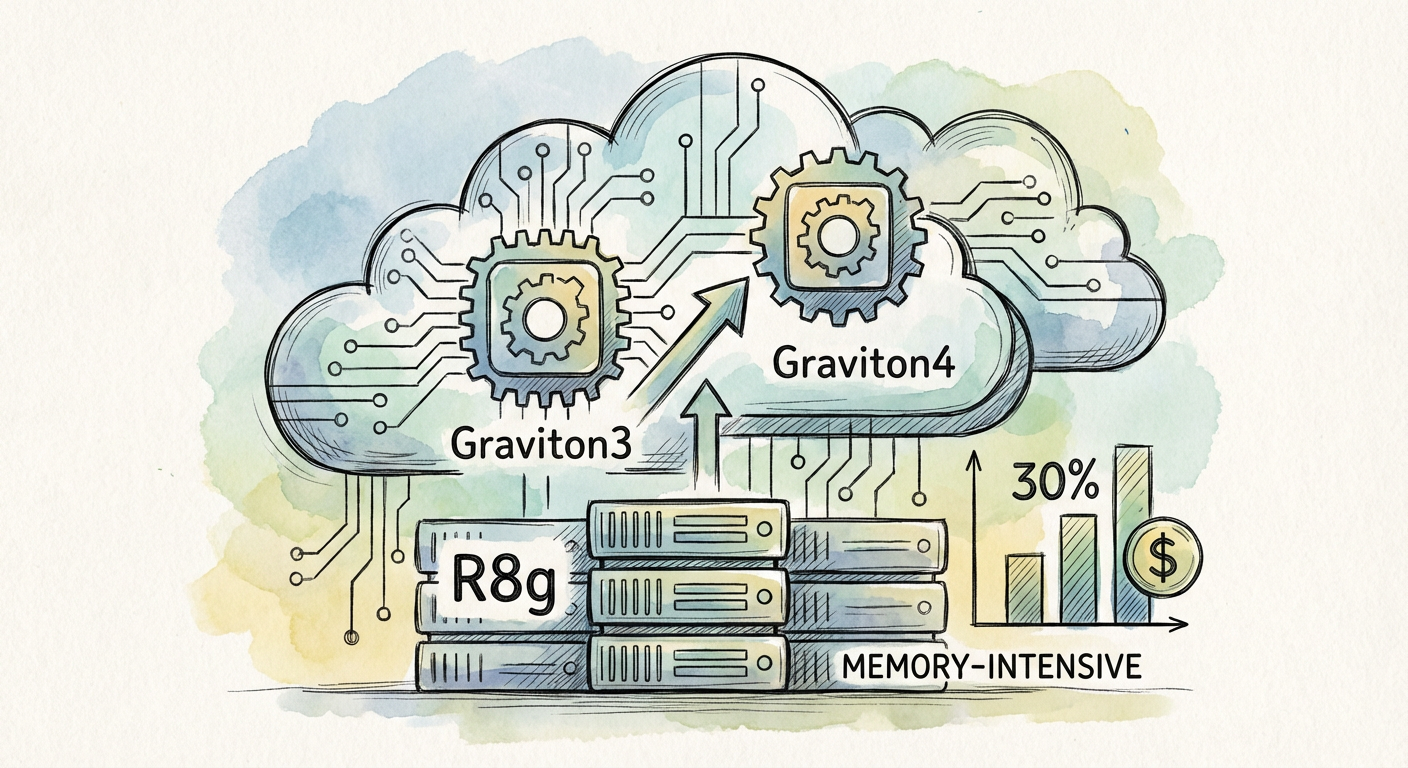
The Arm Transition Is Real, But It’s Not Universal We’re now far enough into 2026 that I can say with confidence: the move to Arm-based processors in the cloud isn’t hype anymore. It’s infrastructure. AWS reported that Arm-based instances accounted for roughly one in five new EC2 launches by late 2025, which is a meaningful… Continue reading The Real Cost of AWS Graviton4 vs. Azure Cobalt 100: A Workload-by-Workload Breakdown for 2026
The Quiet Collapse of the ‘Lift and Shift’ Era: What AWS re:Invent 2025’s Graviton4 Adoption Numbers Actually Mean
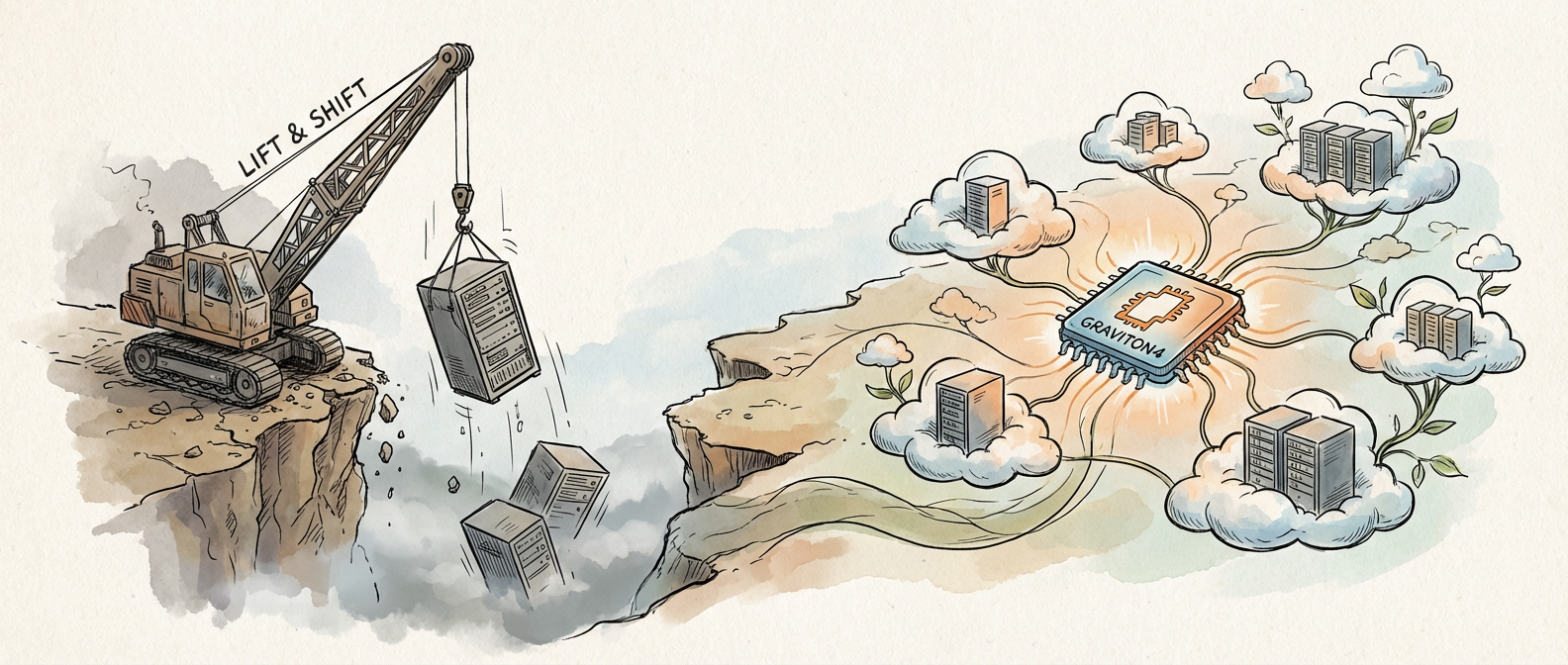
The Numbers That Signal a Fundamental Shift I’ve been watching cloud migrations long enough to recognize when something fundamental changes. At AWS re:Invent 2025, Amazon released adoption metrics for Graviton4 that should have landed harder than they did. Over 35 percent of all new EC2 workloads are now running on Graviton4-based instances, up from 18… Continue reading The Quiet Collapse of the ‘Lift and Shift’ Era: What AWS re:Invent 2025’s Graviton4 Adoption Numbers Actually Mean
The Model Context Protocol Is Becoming the Connective Tissue of AI Tooling

When a Competitor’s Standard Becomes the Industry’s Foundation I have watched enough technology cycles to know when something has crossed from “interesting experiment” into “infrastructure that matters.” The Model Context Protocol, open-sourced by Anthropic in November 2024, is one of those inflection points. What started as an internal solution to a specific problem has grown… Continue reading The Model Context Protocol Is Becoming the Connective Tissue of AI Tooling