The Numbers That Signal a Fundamental Shift
I’ve been watching cloud migrations long enough to recognize when something fundamental changes. At AWS re:Invent 2025, Amazon released adoption metrics for Graviton4 that should have landed harder than they did. Over 35 percent of all new EC2 workloads are now running on Graviton4-based instances, up from 18 percent the year prior. That’s not a marginal improvement. That’s a near doubling of adoption in twelve months. When an architectural pattern stops being experimental and becomes the path of least resistance, you see exactly this kind of velocity.
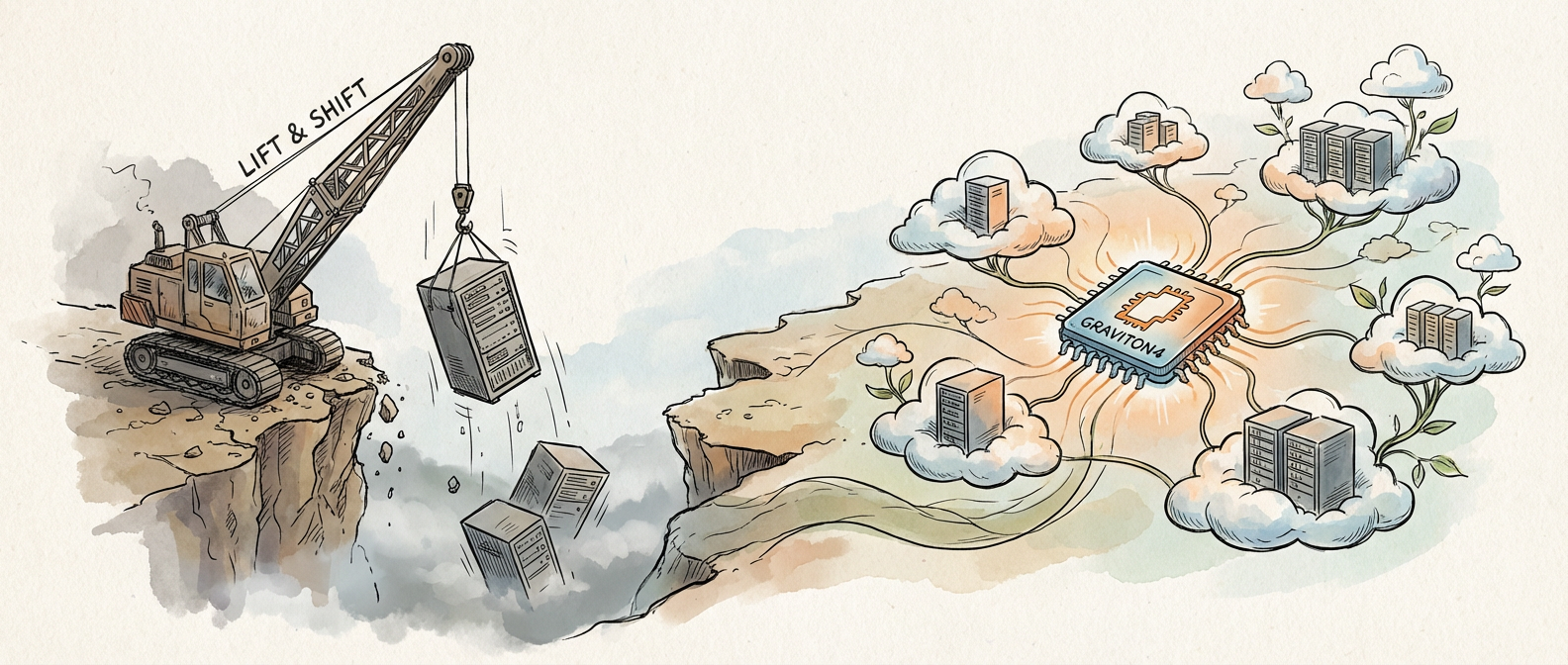
The performance benchmarks make the economic argument almost mechanical. AWS Graviton4 instance performance benchmarks show up to 40 percent better price-performance on compute-intensive workloads compared to equivalent x86 tiers. In cloud economics, that’s not a footnote. When you’re running thousands of instances across production environments, that spread compounds into either significant budget relief or competitive disadvantage. There’s no middle ground anymore.

The Ecosystem Excuse Is Gone
Five years ago, the objection to ARM in production was legitimate. You’d find yourself wrestling with library dependencies, compiler quirks, and honestly, the weight of institutional comfort with x86. I’ve personally debugged those conversations across a dozen organizations. The hesitation made sense when the tooling was thin and community support was sparse. That world doesn’t exist anymore.
Red Hat’s 2025 State of Linux report documented 94 percent year-over-year growth in RHEL on ARM64 deployments. That’s the Linux ecosystem decisively throwing its weight behind ARM. Kubernetes works. Your container registries work. Most of the libraries you actually use have ARM64 builds. The technical debt argument, which organizations have leaned on for years, is now mostly psychological inertia wearing a technical costume.
The True Cost of Standing Still
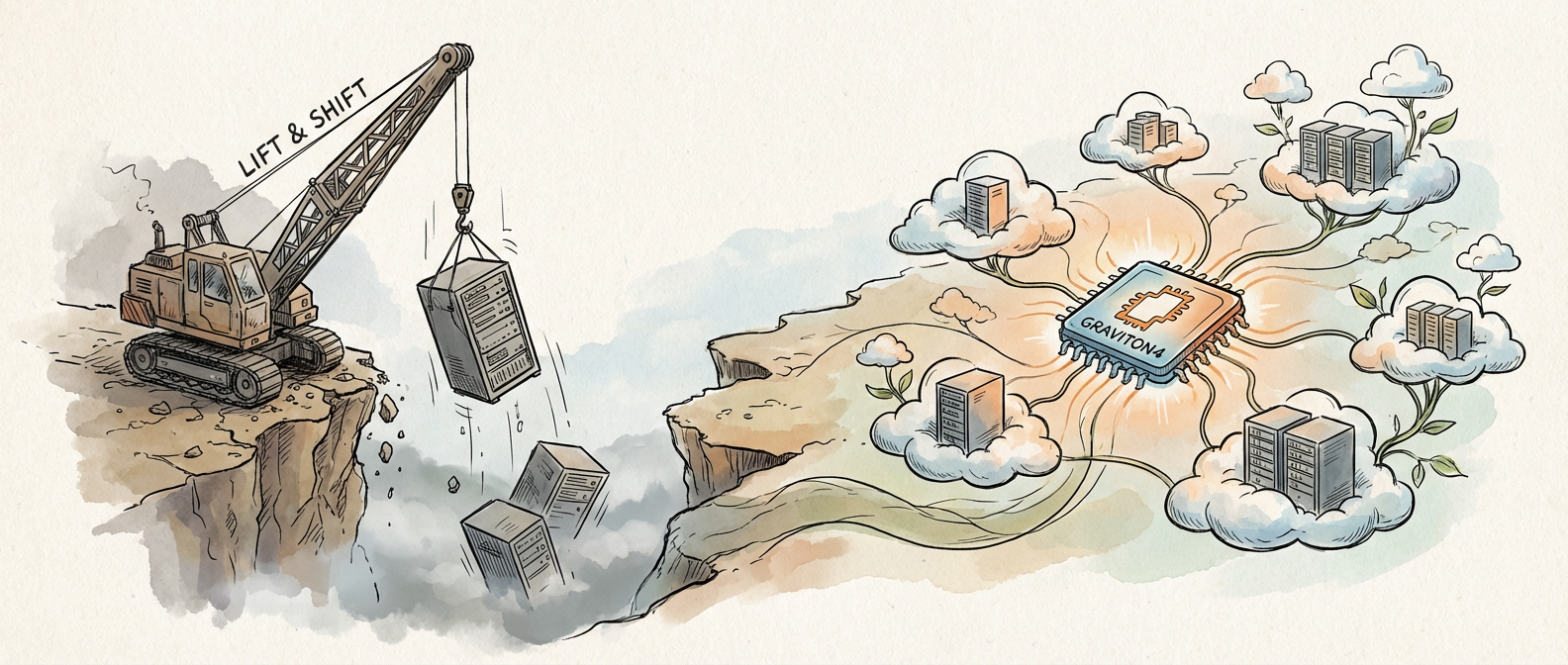
Here’s where the career intelligence matters. According to the Flexera 2025 State of the Cloud Report, 59 percent of enterprises still operating lift-and-shift migration strategies cited x86 dependency lock-in as their primary barrier to re-architecture. These organizations migrated workloads to the cloud without reconsidering their compute architecture. They lifted a database server from on-premises to EC2, adjusted the network settings, and called it cloud transformation.
The practical consequence is visible in IDC’s Q3 2025 analysis. Organizations locked into x86-only cloud strategies are paying an average 22 percent premium on annual compute spend compared to counterparts who’ve embraced ARM-optimized workloads. That’s not a theoretical number. In a mid-sized organization running $5 million in annual compute spend, that’s $1.1 million left on the table every year. Scaled across entire industries, it becomes a real competitive disadvantage.
The insidious part is how this compounds with other technical debt. An organization running purely x86 workloads is also, typically, running older application patterns, less containerization, fewer managed services, and less automation. The x86 lock-in is often a marker for deeper architectural stagnation. The teams managing these environments are also often the ones most stretched thin, least able to experiment, and most dependent on legacy knowledge. The problem reinforces itself.
What This Means for Your Career Decisions
If you’re responsible for infrastructure strategy or application architecture, the ground has shifted beneath you. The “we’ll stick with x86 for compatibility” argument no longer holds water with procurement, because the CFO can now ask why you’re voluntarily paying a 22 percent premium. That’s a difficult question to answer when the technical risk has largely evaporated.
More subtly, organizations that navigate this transition successfully will develop institutional knowledge around modern cloud architecture that organizations clinging to legacy patterns won’t have. ARM optimization requires understanding containerization deeply, managing dependencies explicitly, and treating orchestration as a first-class concern rather than an afterthought. Teams that do this work develop architectural maturity that compounds. Five years from now, that matters.
The career risk is in being the person who defended the x86-only strategy when alternatives existed. It’s a defensible position today only if you pair it with a concrete migration roadmap. “We’ll stay on x86 until budget allows re-architecture” is fine. “We’ll stay on x86 because it’s safer” no longer is.
The Work Ahead Isn’t Trivial
I want to be clear about what I’m not saying. This doesn’t mean every x86 workload should migrate tomorrow. Graviton4 is better for many things, but it’s not universally superior. Legacy Windows workloads stay on x86. Certain licensing models favor x86. High-performance computing workloads sometimes still need x86 specialization. The point is that the default assumption should now invert. You should start with “will this run better on ARM?” rather than “can this possibly run on ARM?”
The actual work of executing this shift requires discipline. You need application instrumentation to understand where your compute is actually going. You need to baseline performance on existing hardware before you change anything. You need to test in pre-production environments where you can measure and validate. Rushing this kills credibility. Moving thoughtfully, with data, builds it. That’s the difference between a successful platform migration and a cautionary tale.
The lift-and-shift era isn’t over everywhere, but it’s ending where it matters most. If you’re building cloud strategy right now, you’re building it in the shadow of that transition. The organizations that move decisively and deliberately through this will find themselves with better unit economics and more sophisticated technical teams. The ones that delay will look back and wonder why they didn’t move when the answer was already clear. That’s a professional timing question worth taking seriously.