I once watched a team burn two months and a modest pile of cash migrating their task management system because the old one was “too clunky.” The new tool had colour-coded everything, drag-and-drop sorcery, and automated reminders loud enough to raise the dead. Six months later, the same team was missing the same deadlines—just with… Continue reading The Problem With Thinking That Better Tools Solve Process Problems
Author: Johnny Chambers
How to Recognize When a Project Is Already Doomed Before It Starts
I once stood in a conference room where the project sponsor kicked things off by saying, “We’re all excited about this—we just need to align on the vision, secure the budget, and figure out who’s actually available.” The coffee was still hot, but the project was already cold. I’d seen that look before: the polite… Continue reading How to Recognize When a Project Is Already Doomed Before It Starts
Why Most Technical Projects Fail for Organizational Reasons Not Technical Ones
I still remember the first project I ever led that burned to the ground. Not because the code was bad. Not because the servers couldn’t handle the load. It died because two VPs couldn’t agree on who owned the roadmap, and by the time they stopped slinging passive-aggressive all-caps emails, the team had already checked… Continue reading Why Most Technical Projects Fail for Organizational Reasons Not Technical Ones
Why Your Technical Project Will Die From the Org Chart, Not the Code
I’ve watched three different companies build the same inventory management system. Same requirements, same technology stack, same market. One shipped in four months. One took two years. One never shipped at all. The difference wasn’t the code. It was never the code. After fifteen years of engineering work across startups and enterprises, I’ve developed a… Continue reading Why Your Technical Project Will Die From the Org Chart, Not the Code
Why Most Technical Projects Fail for Organizational Reasons, Not Technical Ones
I’ve spent the better part of two decades watching technical projects crash and burn. Early in my career, I assumed the problem was always the codeâbad architecture, poor scaling decisions, wrong stack. Then I started paying attention. The pattern was embarrassingly obvious: the failures almost always had organizational fingerprints all over them. The Myth of… Continue reading Why Most Technical Projects Fail for Organizational Reasons, Not Technical Ones
OpenTofu 1.9 vs. Terraform 1.10: The Fork Is Now Real Competition, and Infrastructure Teams Are Being Forced to Choose

The Fork Has Matured Into Something Real I remember sitting in a Slack thread in August 2023 when HashiCorp announced the Business Source License change. The conversation shifted from “this is unfortunate” to “we need a plan B” almost immediately. That fork, OpenTofu, backed by the Linux Foundation, was supposed to be a protest project.… Continue reading OpenTofu 1.9 vs. Terraform 1.10: The Fork Is Now Real Competition, and Infrastructure Teams Are Being Forced to Choose
Salt Typhoon’s Reckoning: How One Year of Carrier Compromise is Rewriting Network Engineering

The Breach We Should Have Seen Coming When the FBI and CISA confirmed in late 2024 that Chinese state-sponsored actors had compromised at least nine major US telecommunications carriers through what they called Salt Typhoon, the reaction split into two camps. One side expressed shock that something of this scale could happen. The other side,… Continue reading Salt Typhoon’s Reckoning: How One Year of Carrier Compromise is Rewriting Network Engineering
AWS re:Invent 2024 Dropped Graviton4 and Amazon Nova — Six Months Later, Are the Cost Savings Real?

The Promise: New Silicon, New Pricing Last November at re:Invent, AWS made two announcements that caught the attention of anyone who has spent the last few years trying to justify cloud spend to finance departments. Graviton4 arrived as the latest iteration of AWS’s custom ARM-based processors, and Amazon Nova launched as a family of foundation… Continue reading AWS re:Invent 2024 Dropped Graviton4 and Amazon Nova — Six Months Later, Are the Cost Savings Real?
Aurora DSQL at Scale: Why Everyone’s Adopting It and Why Your Bill Might Surprise You
The Quiet Revolution Nobody Expected AWS dropped Aurora DSQL into the world at re:Invent 2024, and if you weren’t paying close attention during the keynote, you missed one of the more consequential database announcements in years. This wasn’t a flashy, headline-grabbing launch. No celebrities on stage. No promises to replace your entire data platform. Instead,… Continue reading Aurora DSQL at Scale: Why Everyone’s Adopting It and Why Your Bill Might Surprise You
The Real Cost of AWS Graviton4 vs. Azure Cobalt 100: A Workload-by-Workload Breakdown for 2026
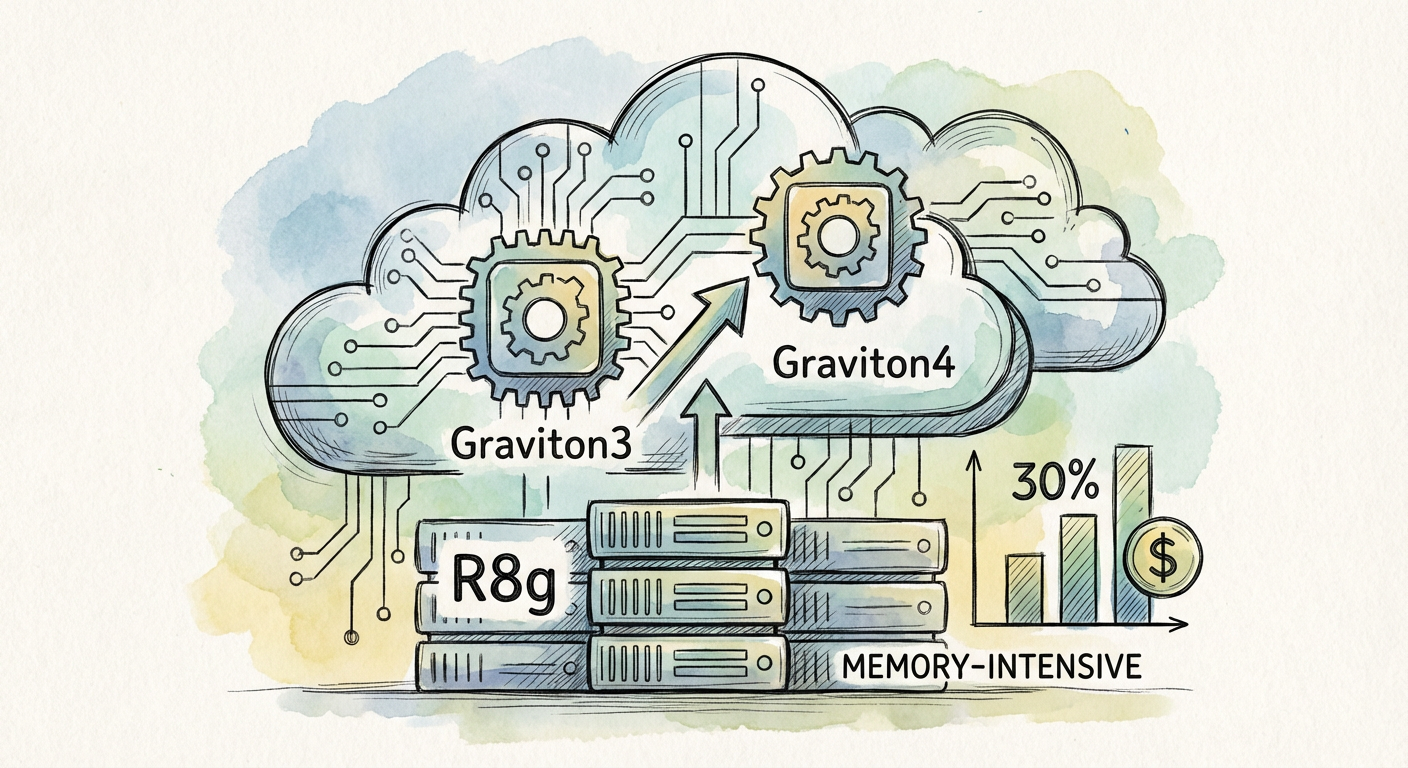
The Arm Transition Is Real, But It’s Not Universal We’re now far enough into 2026 that I can say with confidence: the move to Arm-based processors in the cloud isn’t hype anymore. It’s infrastructure. AWS reported that Arm-based instances accounted for roughly one in five new EC2 launches by late 2025, which is a meaningful… Continue reading The Real Cost of AWS Graviton4 vs. Azure Cobalt 100: A Workload-by-Workload Breakdown for 2026